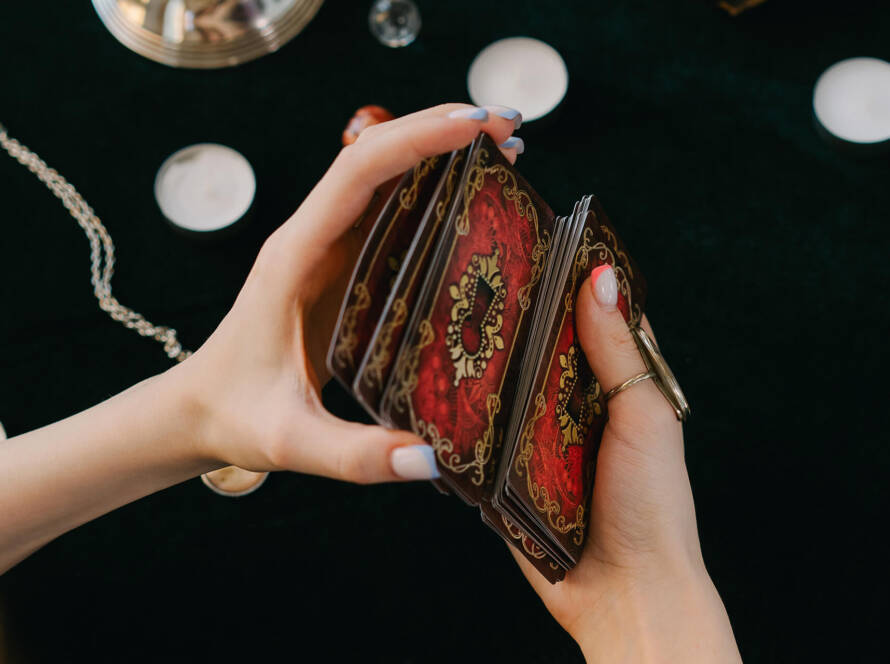
TTherapy often involves exploring your inner world through conversation and guided reflection. Tarot can work in a similar way — the cards act as prompts, surfacing feelings or patterns you may not have consciously named yet. A card isn’t telling you what to think; it’s giving you a starting point to explore what you already feel.
Where the Two Can Work Together
- Journaling prompts — Many people use a tarot pull as a starting point for journaling between therapy sessions
- Naming emotions — Sometimes a card’s imagery makes it easier to put language to something abstract you’re feeling
- Reflection between sessions — A reading can offer a moment of pause and self-check-in during the week
An Important Distinction
Tarot is not therapy, and a reading is not a diagnosis or treatment. If you’re navigating grief, trauma, anxiety, or any significant mental health experience, a licensed therapist or counselor is the appropriate support tarot can sit alongside that work as a reflective practice, never as a replacement for it.
Curabitur varius eros et lacus rutrum consequat. Mauris sollicitudin enim condimentum, luctus enim justo non, molestie nisl.
Piter Bowman
The Takeaway
Used thoughtfully, tarot can be one more tool in your self-reflection toolkit — a way to slow down and check in with yourself. If you’re already in therapy, there’s no conflict in also enjoying tarot as a personal practice; they simply serve different, complementary purposes.
FAQ
Q: Can tarot replace therapy?
A: No — tarot is offered for entertainment and self-reflection. For mental health support, a licensed therapist or counselor is the appropriate resource.
Q: Is it common to use tarot alongside therapy?
A: Yes, many people use tarot as a personal reflection tool between therapy sessions, though the two serve different purposes.